Selling
Selling a flat in a crowded market: when a refurbishment pays
Landlords are selling, flats are sitting online and price cuts are common. A tired flat takes the biggest hit, and the right refurbishment can turn that round.
Facts checked 8 October 2026

If your flat has been on the market for months, with a price cut or two behind it, you are in a very large club. Flats are the hardest thing to sell in the UK right now. Some of what is listed will sell after another reduction. Some would sell faster, and for more, after the right work. This post is about telling the two apart.
What is happening to flats
The numbers all point the same way.
- Prices are slipping. Zoopla’s September 2026 index has flat prices falling in 9 of 11 UK regions. The average flat is £191,800, down 1.3% in a year, while terraced and semi-detached houses rose 1.4% and 1.7%.
- There is more to choose from, and fewer buyers. The same index has 5% more homes for sale than a year ago and 9% fewer sales agreed. Rightmove puts the number of homes for sale at a 12-year high.
- Flats sit. Zoopla analysis reported in August 2026 found that 80.5% of flats listed in 2025 were still unsold six months later, and about 87% in London.
A large part of the supply is landlords leaving. The Renters’ Rights Act ended Section 21 in England on 1 May 2026. A landlord who wants to sell with vacant possession now serves notice under the new Ground 1A, with four months’ notice. Selling with the tenant in place avoids that, but limits the buyers to other investors, and the NRLA’s guidance on selling under the Act puts the usual discount for a tenanted sale at 5 to 10%. Add leasehold uncertainty, service charges and mortgage rates, and you have a lot of similar flats competing for the same buyers.
Why tired flats take the biggest hit
The natural buyer for a flat is a first-time buyer, and a first-time buyer has the least money left over once the deposit and fees are paid. A flat that needs a new kitchen and bathroom asks them to find money they do not have. So they pass, or they offer low, and the discount they ask for is usually more than the work would cost, because they are pricing in the hassle and the unknowns as well as the materials.
The listing photos are the first viewing. A flat that has been let for years tends to show it: worn carpet, tired paint, the original kitchen. On a search results page, next to a refreshed flat in the same postcode, it loses the click before anybody has seen the room in person.
When a refurbishment pays
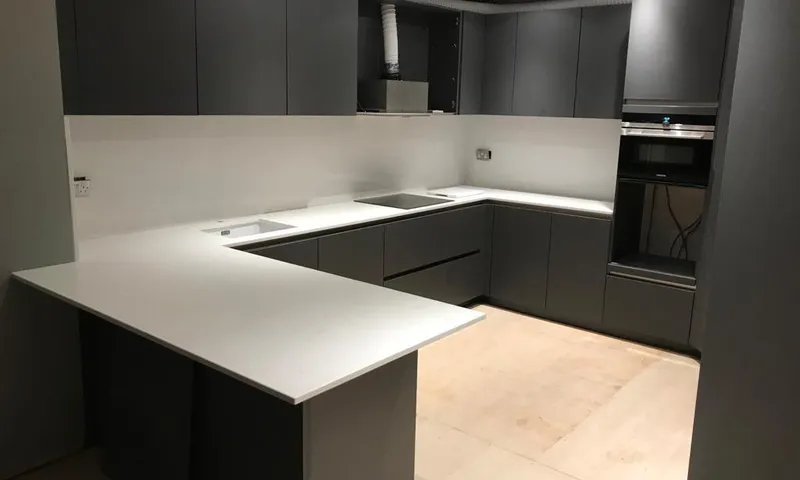
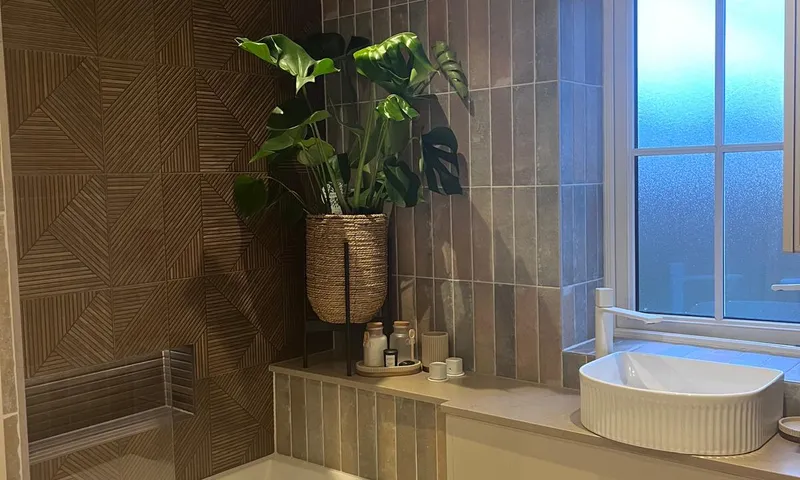
A penthouse we refurbished in Bromley had been on the market for some time. We designed and carried out a full refurbishment: kitchen, bathroom, floors and decoration. It went back on the market and sold quickly, at a profit. In our experience, a full refurbishment before relisting has paid off well for the owners we have done it for. It is not automatic, though, and it is worth checking before you commit.
It tends to pay when:
- The gap is bigger than the cost. Ask an agent for recent sold prices of comparable flats nearby, finished and unfinished. If the difference is comfortably more than the cost of the work plus the months of mortgage, service charge and council tax while it happens, the sums work.
- The problems are cosmetic and fixable. Kitchen, bathroom, flooring, decoration and lighting are what buyers react to, and they are all work a builder can price exactly.
- The lease and the building are sound. A long lease, a reasonable service charge, and no major works or cladding problems hanging over the block.
When it does not
- A short lease. Lenders and buyers are wary of a short lease whatever the kitchen looks like. Talk to a solicitor about extending it first; that may be the better use of the money.
- The building is the problem. High service charges, pending major works or cladding issues are not changed by anything inside your front door.
- The ceiling price. If the best flats in your block sell for a certain figure, you cannot spend your way above it. Aim to reach it, not to beat it.
- Your taste, not the buyer’s. A refurbishment to sell is not the one you would do to live in. Neutral, durable and well finished beats expensive.
What to fix first
In rough order of what moves a sale:
- The kitchen. Replaced, or re-fronted with new worktops if the carcasses are sound
- The bathroom. Clean, bright and with no hint of a leak
- Floors throughout, so the flat reads as one finished place
- Decoration in light, neutral colours
- Lighting, because dark rooms photograph badly
- Anything a survey would flag: damp, tired electrics, a slow leak. The buyer’s surveyor will find it, and it becomes a renegotiation a week before exchange
Keep the layout unless the layout is the problem. Moving a kitchen or bathroom in a flat means new drainage runs and, almost always, the freeholder’s consent. What a kitchen renovation actually involves.
Before you start: the rules that apply to flats
- Licence to alter. Most leases need the freeholder’s written consent for anything beyond decoration. Read the lease and allow time for the consent.
- Flooring. Many leases require carpet, or an acoustic underlay under hard floors, in flats above other flats. A buyer’s solicitor may ask.
- Building rules. Working hours, lift use, parking and where a skip can go are usually set by the building, not by you.
- Building regulations. Electrical work and bathroom extract ventilation have rules of their own, and the certificates go to the buyer’s solicitor. Bathroom ventilation and building regulations.
- If it is tenanted, the Ground 1A notice period gives you a window to plan the work into. Take advice before serving it: if the sale then falls through, you cannot simply re-let straight away.
The tax side, briefly
If the flat is not your main home, Capital Gains Tax is due on the gain. For 2026/27 that is 18% or 24% on residential property depending on your income, after a £3,000 annual exempt amount, and it has to be reported and paid within 60 days of completion. Improvement costs can generally be deducted from the gain, routine repairs may be treated differently, and buying flats specifically to refurbish and sell can be taxed as trading income instead. That is a conversation for an accountant. Keep every invoice: ours are itemised, which helps.
What to do next
If your flat has been sitting online, send us the listing and a few photos. We will tell you what we would do, what it would cost, and honestly whether we think it would pay. We are based in Horsham and work across West Sussex, and further afield for the right job.
Planning work in Horsham?
Tell us what you have in mind and we will give you an honest view.